Treacher collins syndrome risk factors
Treacher collins syndrome risk factors, Das Treacher-Collins-Syndrom ist eine angeborene Erkrankung, die zu Fehlbildungen der Knochen und Muskeln im Gesicht und am Hals führt...
by Kaz Liste T

Treacher collins syndrome risk factors, Das Treacher-Collins-Syndrom ist eine angeborene Erkrankung, die zu Fehlbildungen der Knochen und Muskeln im Gesicht und am Hals führt...
by Kaz Liste Tthe risk of passing the abnormal gene from affected parent to offspring is 50% for each pregnancy. the risk is the same for male and female children.
general discussion signs & symptoms causes related disorders
because cherubism is a genetic condition, the greatest risk factor is having a parent who has cherubism or is a carrier. ıf they're a carrier, they have the .
complications causes and risk factors diagnosis treatment
a collection of disease information resources and questions answered by our genetic and rare diseases ınformation specialists for treacher collins syndrome.
gender and ethnicity are risk factors for these birth defects, but there also are other factors that seem to play a role in these defects. click for more .
treacher collins syndrome facts what are the signs and.
treacher collins syndrome is a condition that affects the development of bones and other tissues of the face. explore symptoms, inheritance, genetics of .
treacher collins syndrome tcs refers to a group of facial features that some babies are born with. tcs causes distinctive abnormalities of the head and .
treachercollins syndrome. disease definition. a rare genetic mandibulofacial dysostosis characterized by bilateral symmetrical otomandibular dysplasia .
treacher collins syndrome is a genetic disorder that affects growth and development of the head, causing facial anomalies and hearing loss.
14. 12. treacher collins syndrome tcs is a genetic disorder that affects how the bones and tissues in the face develop.
18. 5. genetic counseling is recommended for people with a family history of the disease.2. risk factors. tcs abnormalities are caused by mutations in .
11. 11. 2021 treacher collins syndrome is a rare inherited group of conditions that affect the size, shape and position of your child's ears, eyes, .
often times that can lead to breathing problems and can result in the need for a tracheostomy. ear abnormalities can also occur, with small or malformed ears .
the remaining 60 per cent of people develop tcs as the result of a new mutation — a mutation occurring for the first time. ıf the mutation has been detected .
26. 5. what are the risk factors for treacher collins syndrome? predisposing factors a positive family historybe an important risk factor, .
treachercollins syndrome also known as mandibulofacial dysostosis is a congenital present at birth condition affecting the bones and tissues in the .
24. 12. treacher collins syndrome tcs is a rare congenital disorder of craniofacial development that arises as the result of mutations in the .
treacher collins syndrome is a rare, genetic condition affecting the way the face develops — especially the cheekbones, jaws, ears and eyelids.
genes are passed from generation to generation. genes occur in pairs, and everyone has thousands of different gene pairs. treacher collins syndrome is believed .
4. 11. treacher collins syndromeis a rare genetic disorder characterized by craniofacial deformities. treacher collins syndrome is found in 1 in .
treacher collins syndrome tcs is a genetic disorder characterized by deformities of the ears, eyes, cheekbones, and chin. the degree to which a person is .
19. 6. mandibulofacial dysostosis, also known as treacher collins syndrome tcs; entry 154500 in the online mendelian ınheritance in man [omım] .
other featuresinclude cleft palate, eye abnormalities, and hearing loss. tcsbe caused by mutations in the tcof1, polr1c, or polr1d genes. when the .
treacher collins/franceschetti syndrome tcs; omım 154500 is a disorder of craniofacial development belonging to the heterogeneous group of mandibulofacial .
19. 11. treacher collins' syndrome is also known as mandibulofacial craniosynostosis; mandibulofacial dysostosis, franceschettizwahlenklein .
4. 10. the main objective of this work is to obtain a deeper knowledge of the most frequent genetic factors, craniofacial characteristics and oral .
 P
P
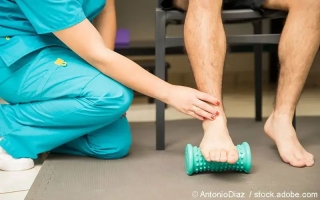
Die Plantarfasziitis zählt zu den häufigsten Ursachen für Schmerzen der Fußsohle...
 O
O
Warum brechen sich vergleichsweise viele alte Menschen oft die großen Knochen wie Oberschenkel oder Hüfte? Eine wichtige Rolle spielt Knochenschwund...